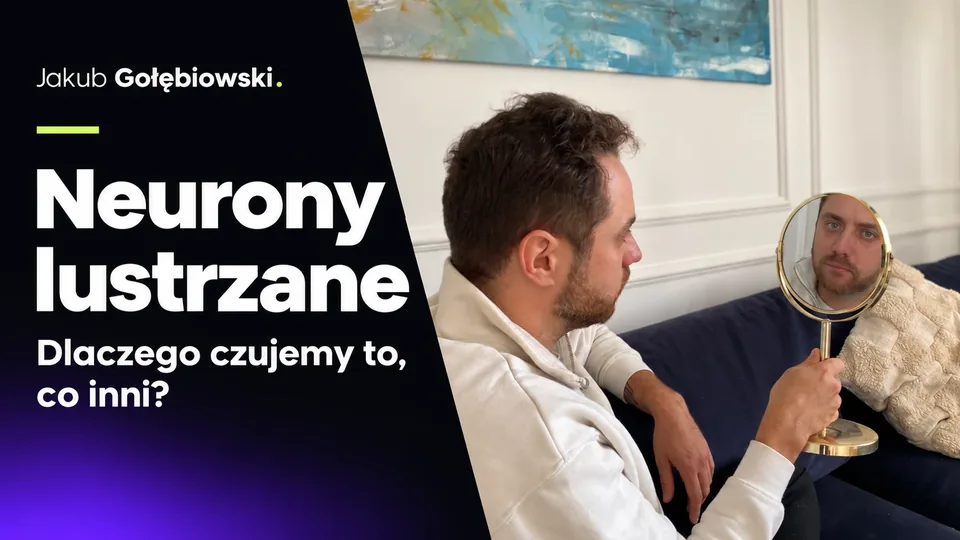
Why do fans experience the successes and failures of players, even though they themselves sit in front of the TV? Why can we feel moved or laugh while watching a movie? Why do taped laughs still work in sitcoms?
The answers to these questions are mirror neurons, compassion mechanisms in our brain. Marketing designed in accordance with this knowledge can increase customer attention, improve understanding of the product or service and increase willingness to purchase.
From this article you will learn how to develop your work and improve your results,
What are mirror neurons?
Mirror neurons are elements of the brain that trigger emotions in us that are similar to those felt by another organism we observe.
In humans, primates, and even birds, watching members of our own species have something happen to them triggers responses in the brain that are similar to those experienced by ourselves. This is the essence of the practical lesson on mirror neurons and the so-called Action Observation Network (AON).
Examples:
when you see happy people, you start to feel happy yourself,
you grimace and feel discomfort when watching horror movies, even though you are sitting in a comfortable chair,
when you look at successful people you feel like this you he was referring to it (very important from a marketing point of view!)
The history of the discovery of mirror neurons
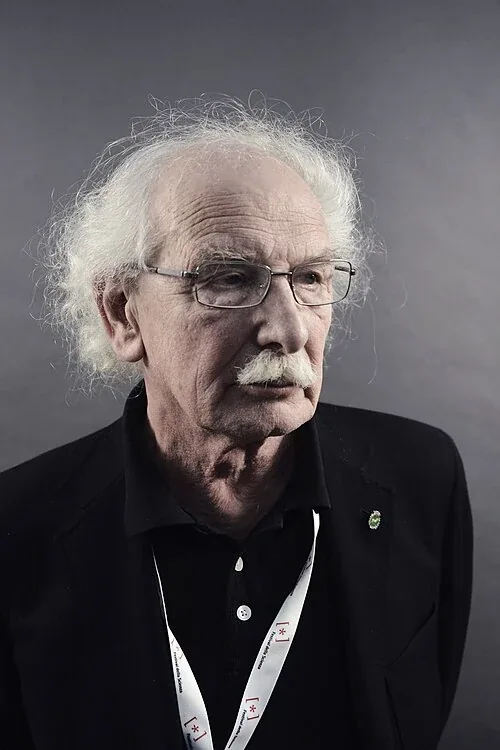
Mirror neurons were first discovered in macaque monkeys. In the early 1990s, a team of Italian neurophysiologists led by Giacomo Rizzolatti in Parma conducted research on the motor cortex of macaques. They recorded the activity of individual neurons responsible for planning hand movements.
They expected neurons to fire when the monkey reached for the object. However, something surprising turned out - some neurons were also activated when the monkey just watched the human perform the same action (e.g. reaching for a peanut). It was a random but groundbreaking moment.
Researchers noticed that neurons fire not only when they move themselves, but also when they observe the movement of another organism. They called them mirror neurons because they acted as an internal mirror of someone else's activity. In short: the monkey felt as if he had reached for the nut himself.
Mirror neurons in humans
While the observation in monkeys was confirmed and specific brain structures were identified, the human brain is much more complicated. We do not see the activities of individual neurons on a daily basis, but we observe the activity of the broader AON network, which is activated when we look at the activities of others.
It's a powerful marketing tool, although it doesn't work like a simple "buy now" button.
The most important conclusion: the mirror neuron mechanism almost certainly exists in humans, although it operates in a more subtle and complex way than in simpler animals. This mechanism will not explain everything, but surprisingly a lot.
I asked the famous psychiatrist, Joachim Budny, for a comment:

“The work shows that mirror systems (with activity similar to mirror neurons in monkeys) influence the understanding of the intention and purpose of behavior, even complex ones.
They are perhaps a key system for empathy in the sense of compassion, i.e. understanding the state of other people. These abilities are the basis of many social interactions that allow us to sympathize with or empathize with someone, but also to sense falsehood or manipulation, or oval mockery or threats.
There are hypotheses linking certain disorders, such as autism spectrum disorders or some personality disorders, with damage to mirror neuron systems. Mirror systems in humans are much more complex than in animals, which is reflected in much more sophisticated interpersonal communication.”
Joachim Budny, Psychiatrist (www.psychiatrajoachim.pl)
Sources he recommends:
How to implement the mirror neuron mechanism in sales and marketing?
The mechanism of mirror neurons and action observation networks (AON) can be translated into very practical marketing and sales decisions. Below you will find the tactics that most often produce results in research and practice:
1. Showcase people who achieve success with your products or services
It's simple, but it works: when we see other people in a situation of success, our brains react as if we were experiencing it ourselves. This directly increases motivation and the feeling of "I feel it too, I want it too."
2. Show emotions and faces
They are the ones that activate mirror neurons most strongly. Animations or infographics are useful, but they do not evoke the same reaction in the recipient as real human faces and emotions. Remember: people convince other people, not cartoon avatars.
3. Use video
A picture is worth a thousand words and a video is worth a thousand pictures. No other online medium today works so effectively on the mirror system. If you want your recipient he felt action, you need to show it to him, not just describe it.
4. Anthropomorphize (humanize) ads
Research shows that our brain resonates most strongly when we see activities at our fingertips (so-called peripersonal spaces).
Use a first-person perspective (POV) shot and show your hands in the frame. Close-ups of a mouse grip, clicking a key or moving a cursor immediately trigger the idea: "that's how I would do it." Shots from a distance make an impression, but they do not create such a strong feeling that we can repeat the action ourselves.
5. Talk less and give a demo instead
The Journal of Neuroscience confirms: showing a short action is more powerful than just talking. Instead of "easy to use", show a 5-second video of the cursor making three clicks and you can immediately see the effect. In B2B, video micro-trainings work best: short loops on the home page, a GIF in a cold email or a mini-demo in a presentation.
6. People like me (something about UGC, i.e. User Generated Content)
The AON network responds more strongly to social stimuli. This means that we are most convinced by people who are similar to us: real users who do real things. A video of a customer using your product is more powerful than a stock model with a mockup.
7. Add action sounds
Subtle sounds of movement, such as clicking, rustling, moving an object on the table, enhance the impression of presence and agency. It's a simple element that really increases immersion. You can easily check this: compare watch time and CTR for the version with and without sound.
8. Mimicry on sale 1:1
A subtle reflection of the client's posture, gestures and language builds a sense of understanding. Field studies showed that waiters who repeated what guests said when ordering received higher tips. Retail salespeople achieved better conversions when they subtly adjusted the way they spoke and gestured. It's not magic, it's a neurological signal: "he is like me and understands me."
9. Create case studies in the form of instructions
A well-constructed case study is not only a story about the result. This is the specific instruction:
context of action → goal → 3 steps to success → result.
This allows the recipient to practice the process in their head before even trying it themselves.
10. Designing product pages for action
The best product pages are not just a description, but an invitation to action.
Simple pattern:
At the top, a short clip of someone using the product within arm's reach.
Below, place "Do it now" sections, such as configurator, live-demo, sample download.
Important: do not cover elements that show moving hands. Research shows that when the hand is invisible, the mirror effect decreases dramatically.
Ideas for quick implementation of mirror neuron mechanisms in marketing and sales
1. Ads and shorts.
Record three variations of the same scene:
(A) POV with hands – camera from the user's perspective, you can see hands and the product within the range of movement;
(B) the so-called plan semi-total – a figure in the frame, showing action, but still within arm's reach;
(C) distant plan – the whole scene, more lifestyle.
Compare their effectiveness: measure hook rate (how many people watch the first 3 seconds) i CTR (how many go to the page). Usually (A) POV wins, but for some categories (e.g. fashion, design) semi-total gives a better emotional effect.
2. Hero on the landing page
Instead of a static banner, prepare a short loop of 6-8 seconds: "from nothing → effect". For example: empty desk → three clicks → ready dashboard. Highlight exactly three movements so that your brain can practice them in your imagination.
Place a button under the video "Do it now", which leads to a simple demo or trial. Thanks to this, the recipient will not only see the action, but will immediately repeat it.
3. Case study
Don't stop at describing the results ("+200% sales").
Add elements that allow the recipient to practice the steps:
three GIFs or short loops showing key moments (e.g. "click in campaign", "segment configuration", "effects report")
signatures in form operating instructions, not a description ("We have added an X filter" instead of "We have implemented segmentation").
This turns the case study from a dry story into an instruction that the client replays in his head.
4. Trading script
Add a step in your conversationrepeat in your own words”: after hearing the client's needs, paraphrase his sentence and ask for confirmation ("Do I understand correctly that you want...?"). This is what it's supposed to be pacing & leading, not "parroting". First, practice matching the interlocutor (posture, pace, key words), then leading to a decision, otherwise it will come out artificial
Also practice tempo and pauses - too fast a reflection sounds artificial, and too slow one loses the effect. It's about a subtle tuning that makes the client feel "understood" and you feel like "his guy/cool lady"
5. Measure results
Don't measure generic "brand lift" metrics. Define hypotheses under specific actions.
Examples:
"The POV version will increase the percentage of people clicking 'Start trial' by at least 10% compared to the semi-total version."
“Adding 3 GIFs to a case study will increase average time on page by ≥20%.”
"The 'Do it now' button under hero will increase the number of trials by at least 15%."
This gives you clear results and quick conclusions: whether the mirror effect actually works in your category.
What is the real truth about mirror neurons? What marketers say vs. what science says
Marketers often greatly simplify reality and it does not always end well... for them. While such simplifications allow you to easily sell something to your superior or customer, it does not always translate into a real effect. Therefore, I will now debunk the most common myths:
Myth: “We activate mirror neurons and people will buy.”
Fact: There is no “button” in the brain to control the decision. Rather, we see a network of observations of action and her modulation context (distance, perspective, purposefulness of movement). Beware of agencies selling “neuro hacks.”
Myth: “We have hard evidence in humans at the level of single neurons.”
Fact: In typical human studies, we mainly have indirect signals (fMRI/EEG). Scientists warn against over-interpretation and ask for caution in drawing conclusions when designing "neuromarketing" practices.
Myth: “Any video with hands will work.”
Fact: The effect depends on the context: proximity to the scene, perspective (1st-person vs 3rd-person), clearly visible goal activities. Test different angles and distances.
Summary
Mirror neurons are not a magic "buy now" button. They won't sell anything for you.
However, it is a mechanism that makes people they feel the actionbefore they do it themselves. Thanks to this, marketing and sales based on images, emotions and demonstrations can be much more effective than declarations or descriptions alone.
Your task is to show hands in motion, faces with emotions and real people in a situation of success. Then the customer moves more quickly from "sounds cool" to "I'm doing it now." And if you add tests and measurable hypotheses, you can turn the mirror effect from a neurobiological curiosity into a practical business tool.