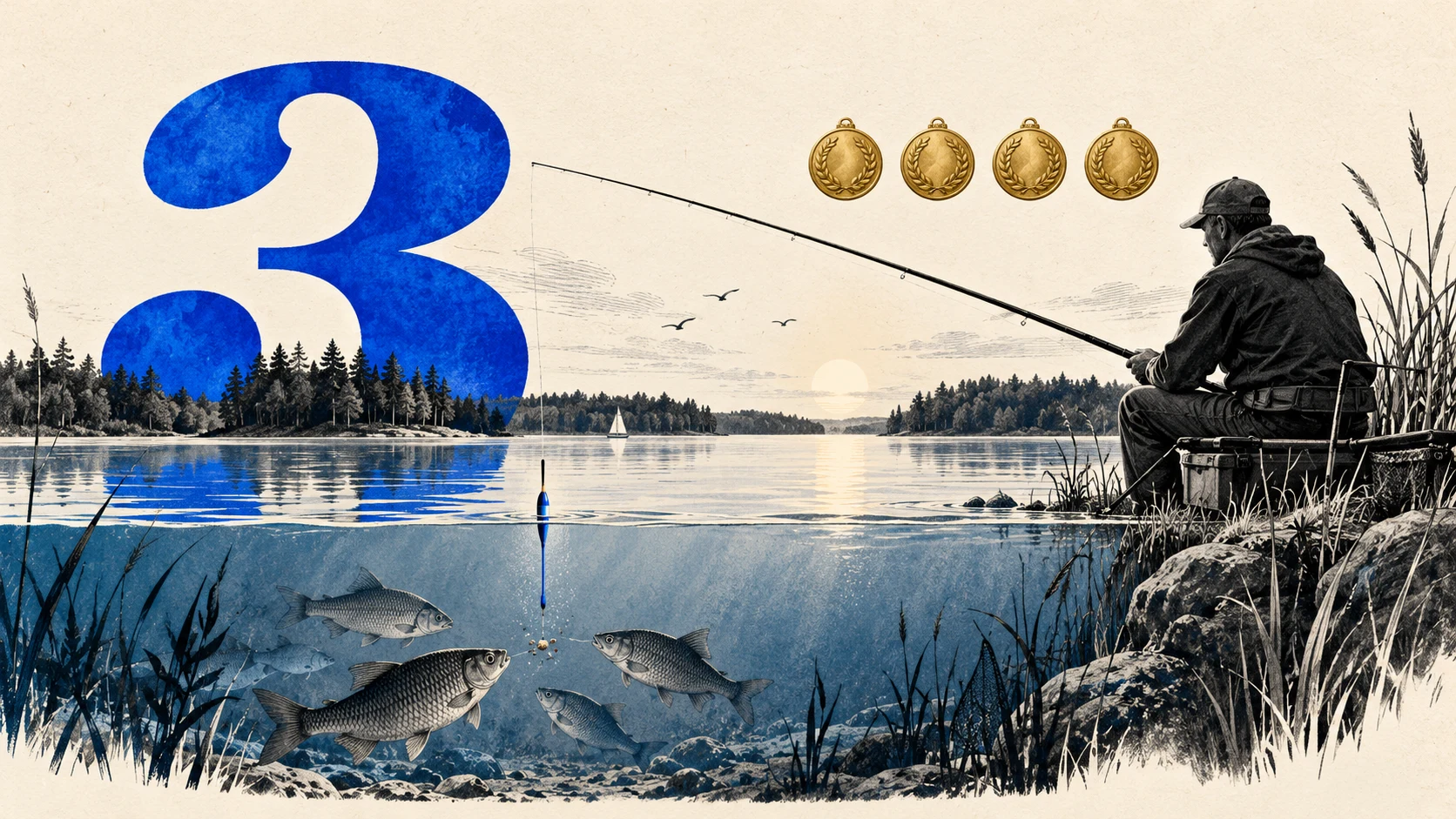
Once, in Poland’s Masurian Lake District, I met a man who had become world champion four times in what I call interspecies sales.
Sounds absurd? That was my first thought too. But when he told me what he did and how he won, I realised his method was the foundation of what successful entrepreneurs, salespeople and marketers do. And what they often forget when they get caught up in new tools and techniques.
I have worked in marketing and sales for over ten years. I have seen plenty of new tools, trends and technologies. And I increasingly appreciate simple principles.
Technology changes rapidly, but basic human needs and the mechanisms behind our decisions have been the same for thousands of years. They are so universal that they guide many animal species too!
That is what this article is about. A foundation that many people forget, and fail as a result.
How did I meet a four-time world champion in sales?
I am a skipper and I lead sailing trips.
On one of those trips, my crew and I sailed into a harbour in Masuria. That evening, we went to a tavern hosting a sea shanty concert. We were singing and having fun when a stranger joined us.
“My crew don’t feel like partying. Can I join you?” Of course, welcome aboard. The concert ended, we sat down over a beer and started talking about what we did for a living. Suddenly, our new friend mentioned that he had four world championship gold medals.
In what? Float fishing. Before you stop reading, give me a chance to explain.
Think of it this way:
- In an individual sport, consistent results come from looking after your body, training and eating well. You generally control your performance, which is why you keep winning.
- In a team sport, it is similar, except the whole team is responsible for the result.
Here is the puzzle at the heart of this story: our four-time world champion wins consistently because he persuades fish. The fish’s decisions are largely responsible for his result, and they do not even know they are taking part in a competition.
How did he improve his chances when he could not control the fish’s decisions? The answer turned out to be remarkably simple, and his methods translate perfectly to sales.
1. He knew more about his “customers” than his competitors did
The champion studied hard and knew more than his competitors. That was the foundation of his success. Without it, nothing would have worked.
He studied fish behaviour, their environment and their habits in specific fishing waters. For example, he told me about a competition in Sweden. He knew that in a particular part of the lake, with specific sunlight and vegetation, he could find the fish he wanted at a certain time. His competitors either lacked that knowledge or did not use it as effectively.
A similar principle applies in B2B and B2C sales: the person who knows more about the customer’s needs wins.
How do I do it?
In my work, I always start with research and check whether there is even a problem I can solve. Then I talk to people and test my assumptions instead of falling in love with my first hypothesis.
- In B2B, before reaching out to a potential customer, I look for public information about the company, its customers, competitors and challenges. I read its website, industry material and company records, and watch interviews and social media content. I also talk to people in the industry. I look for answers to these questions: what does the company want to achieve, what is getting in its way, and who actually makes the purchasing decision? At this stage, you simply need to listen and learn.
- I take a similar approach in B2C. It is worth conducting quantitative and qualitative research before any campaign too.
Now for some other examples:
- Want to land your dream job? First, research the market and the current needs of the companies you are contacting. Only then write your CV and send it to specific people.
- Want to win over a potential partner on a date? First, find out what matters to that person, what they like and what they want.
I know, it all sounds obvious. But plenty of people skip this stage because of laziness, selfishness, ego or the assumption that “I know better”.
It comes down to one piece of advice: first, listen to the customer with humility, educate yourself and stay open to their perspective. Only then act.
2. He tailored his offer entirely to the customer
Once our champion knew where the fish were and what they were looking for, he used his knowledge to choose the ideal bait.
The important part here: HIS OWN knowledge.
He was not guided by what happened to be fashionable in fishing shops or what his friends recommended. His starting point was always the fish’s behaviour and interests in those particular conditions.
And in business?
We often do the opposite. We have a service we want to sell, surplus stock or a campaign planned by management. Then we try to persuade the market to take an interest in our problem.
How do I do it?
I prefer to start with the customer’s problem. Only then do I choose the solution, the scope of the work and the way to explain its value. This also requires a very good understanding of your own product. Without it, adapting an offer is difficult, even when you understand the customer extremely well.
Next, I prepare a proposal based on a specific need. I show what result we can achieve and why that particular solution makes sense in this situation.
Ask yourself:
Does your offer mainly describe what you do, or what will change in the customer’s life or business? Is it for you or for the customer?
Take your last ten proposals and ask yourself: how many were preceded by actually getting to know the customer? How many were individually tailored?
3. He acted at the right time
His knowledge of fish also helped the champion choose when to fish. He could have excellent bait, but if he arrived too early or too late, his chances would fall. Because he had the knowledge, he knew when to cast.
And in sales?
The timing of your approach matters enormously. A company might fit your ideal customer profile perfectly but have just frozen its budget. Or it might have just hired a new marketing director, entered an overseas market or be launching a new product. The same message might be ignored on Monday but become highly relevant a week later after priorities change.
How do I do it?
I watch for buying signals and only then choose the channel and timing of my approach. When a customer is not ready, I record the context of the conversation, plan follow-ups and return when the circumstances are right. In marketing, we also apply this principle through remarketing and by matching content to the stage of the purchasing decision.
Ask yourself:
Pick ten proposals or campaigns at random and try to explain why you sent them at that particular time. Was the timing right for you or for the customer?
If the answers are unclear, you have probably found an area where you can improve results without buying another tool.
From fishing to big technology companies
You might be thinking: “But people are not fish.” True. Of course, dealing with people involves additional skills: listening, building trust and negotiating.
But the foundation of effective persuasion remains the same: knowledge, a tailored offer and the right timing.
The biggest technology companies have made billions on this principle. Advertising platforms such as Google, Meta and TikTok do exactly this, building a significant part of their business on matching messages to users’ interests and behaviour.
The scale is completely different from fishing, but the logic is similar. First, they understand the audience, then they choose the message and try to reach people at the right moment.
The most important lesson
In marketing, it is easy to get carried away by new technology. AI, automation, new advertising platforms and fashionable methods can help a great deal. But how effective those tools are depends on whether we understand the person we want to reach.
My friend from the tavern had four gold medals because he consistently improved his chances through preparation. He did not control the fish. He controlled his own knowledge, his choice of bait and when to present it.
So remember three things:
- know your customer better than your competitors do,
- prepare an offer that addresses their actual need,
- act when they have a reason to make a decision.
This principle is useful beyond sales too. A musician needs an audience, a writer needs readers, and an entrepreneur needs people they can actually help. The better you understand the other side, the greater your chance of creating something valuable.
That is what I wish for you and for myself.