“Not everything at once, or it will be a hassle,” my Grandma used to say. And that's really great strategic advice. One of the most important elements of strategy is defining what no we do and what we put aside for later.
It's surprisingly easy to start doing everything, everywhere and for everyone. The problem is that this approach usually doesn't work. Why? Because it overloads our capabilities and at the same time does not allow us to focus on what is really important
In practice, in many situations, the most effective approach is one that focuses on the first, small and precise step (land) - and only then on developing your activities (expand).
In contrast, the approach of trying to sell a large contract or acquire many customers at once looks impressive, but carries greater risk: the customer does not yet know the value of your work, and the sales process becomes long, expensive and fraught with a high probability of failure. "Land and expand" minimizes these barriers and allows you to gain trust gradually.
Where does the Land and Expand strategy work?
Entering new markets and segments. Particularly important when entering hermetic markets where decision-makers know each other well. There are more such industries than you might think.
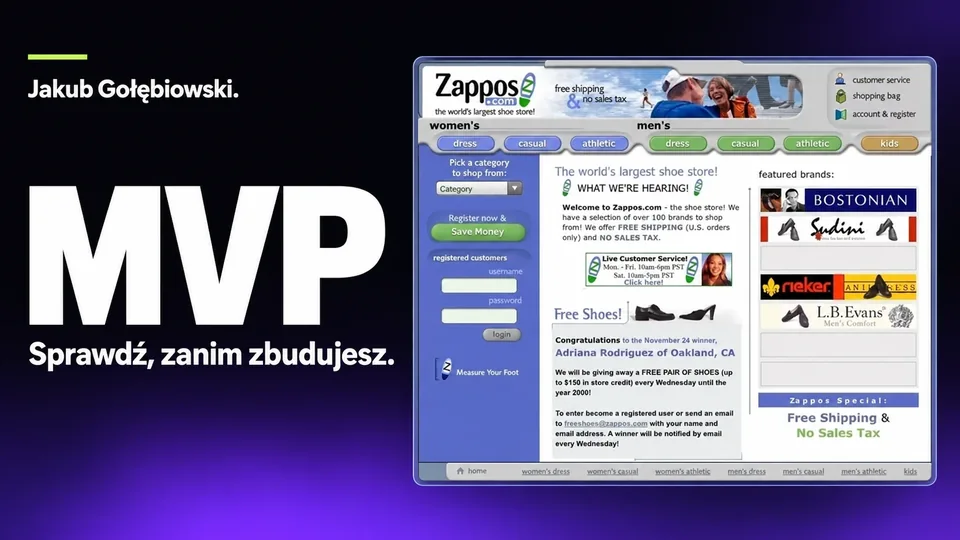
Creating a new company. It is better to build an MVP (Minimum Value Product) at the beginning you can read here) and try to sell them to the first customer, rather than theorizing and investing large amounts of money.
The strategy works particularly well in B2B (Business -> Business) because:
minimizes risk for the client – it is easier to buy a small implementation than a large project at once,
allows you to quickly check your partner – quick results build the willingness to continue cooperation,
builds trust based on real results, not promises.
What are the advantages for you of the "Land & Expand" strategy?
Easier selling. The first contract is smaller, which lowers the decision threshold.
Less risk and lower costs. The customer can test the service or product without a big commitment, and you gain valuable information and experience. By starting with single orders, you do not risk your budget, and in addition, developing cooperation with a current client is cheaper than the cost of acquiring new ones.
Stable and predictable revenue growth. Gradual expansion of cooperation ensures regular revenue development over time, rather than relying on single large transactions.
Stronger relationships and higher customer lifetime value (CLV). By focusing on delivering value and providing excellent support every step of the way, you build lasting connections. Customers stay with you longer and spend more over time, which is why the customer's value increases over the entire period of cooperation.
Brand ambassadors and referrals. Customers become brand ambassadors. Over time, they not only spend more, but also recommend your company to others, generating additional revenue.
How to implement this in practice?
🛬 Land: it's a small step for the company, but a big step for the strategy
The most important goal: to make the first project with the first client. It may be a small, low-scale, low-margin project. It's important that he is there! Without this, the next part may be impossible. How to get there? Preferably with very precise, modern prospecting.
The basis is:
👨💼Precise definition of personas and purchasing processes. Carry out the process of creating personas (about which I'm writing here) potential customers who may benefit from your product or service. Find out how your product/service can add value to different departments or areas of the customer's business. This will help you identify expansion opportunities and adapt your sales/customer success approach.
👍 Hyper-Personalization and a market fit product. The first sale is usually achieved by perfectly matching the solution to the needs of the first customer.
🤔 Humility and patience when setting the price. Don't try to make money on your first sale. Treat your first project as an investment in the future.
❤️Start small and demonstrate value right away. Showing a customer how your product or service can immediately provide value and solve a problem makes it easier for them to say yes. Pushing too hard at the beginning of a deal leaves little room for future expansion. It's important to balance initial sales with future growth potential.
❤️ Service. Here, just give it your all.
🎥 Brag. After successful implementation, write a case study, record a video, make a presentation, and ask for references. You need to extract as much material as possible from your first projects for further sales and marketing.
🛫 Expand: add gas
Expand: after proving effectiveness, the natural next step is to expand cooperation with the current client and acquire new ones thanks to him. The main growth drivers in the land and expansion strategy are:
😀 Retaining a current customer. A low Churn level (customer churn rate) is always important and is worth taking care of from the beginning. Additionally, once you build trust and demonstrate value, it's easier to introduce new products or features (cross-selling) and convince the client to expand cooperation (up-sell).
🤝 Obtain and use as many commands as possible. Satisfied customers can participate in referral programs, case studies, content creation, reference calls and many other revenue-generating activities.
🙋🏼♂️Get more customers. Gain new customers with existing relationships, resources and credibility. Along the way, you should also gain knowledge of what works in sales and what is better to let go.
📈 Get ready to scale. Your product and processes must allow you to gradually increase the number of customers. If you can't handle the increased demand, you will quickly become overwhelmed and fail to meet customer expectations.
📊 Key KPIs at this stage are: churn level, Customer Lifetime Value (CLV), upsell and cross-sell rate, CAC (Client Acquisition Cost) and the rate of acquiring new customers from referrals.
Good examples of the Land and Expand strategy
Examples of land and expansion strategies in business
Salesforce
The classic "land and expand": they started with small departments in companies, then grew to corporate implementations covering the entire organization.
Land: Salesforce didn't go into companies with the entire package at once. They started with small steps, implementing one cloud in one department. This low-risk entry made it easier for companies to try out the solution.
Expand: Once the value became obvious, Salesforce was able to add more clouds. Today, only about 20% of customers use four or more clouds, but they generate almost 85% of ARR. Interestingly, most of the growth (≈79% in FY22) comes not from new customers, but from existing customers who are buying more and more.
Dropbox
The "land" stage includes free individual accounts that employees set up themselves; “expand” were paid company plans when IT saw that the entire team was already using.
Land: Dropbox started with free individual accounts. Employees used it privately to share files. That was the catch - millions of people signed up without asking their IT department for permission.
Expand: When companies saw that entire teams were already using Dropbox, they started switching to paid business plans. At its stock exchange debut in 2018, Dropbox had 500 million registered users, 11 million paying customers and over 300,000. paying business teams. 92% of Fortune 500 companies had paying Dropbox users.
Slack
Starting with individual project teams that quickly expanded use to the entire organization.
Land: Slack entered the organization team by team. One project group was able to implement it quickly and feel the benefits immediately.
Expand: Then the tool expanded to the entire company. By 2019, Slack had over 600,000 users. organizations, 88 thousand paying customers and 575 customers spending over PLN 100,000. USD per year. Net Revenue Retention reached 143% - evidence that existing customers were constantly increasing their spending.
Tinder
Tinder started by organizing parties for popular, attractive students at American universities, where the entrance fee was a Tinder account. As a result, less popular students created accounts, and then it snowballed thanks to the network effect
Land: aggressive distribution on campuses (among others. USC, Greek communities) + events; e.g. on October 31, 2013 in LA, people entered the party after showing the installed application.
Expand: October 2014 - >1 billion swipes per day and ~12 million pairs per day.
It started as a project only for Harvard students (land), then expanded to other universities, then to the whole world (expand).
Land: first Harvard (February 2004), end 2004 - 1 million users.
Expand: 26/09/2006: opening of the platform for everyone 13+ with an e-mail account. August 2008: 100 million users and the start of global expansion.
Examples of land and expansion strategies in history
The Land and Expand strategy works not only in business, but wherever you need to enter difficult terrain with limited resources.
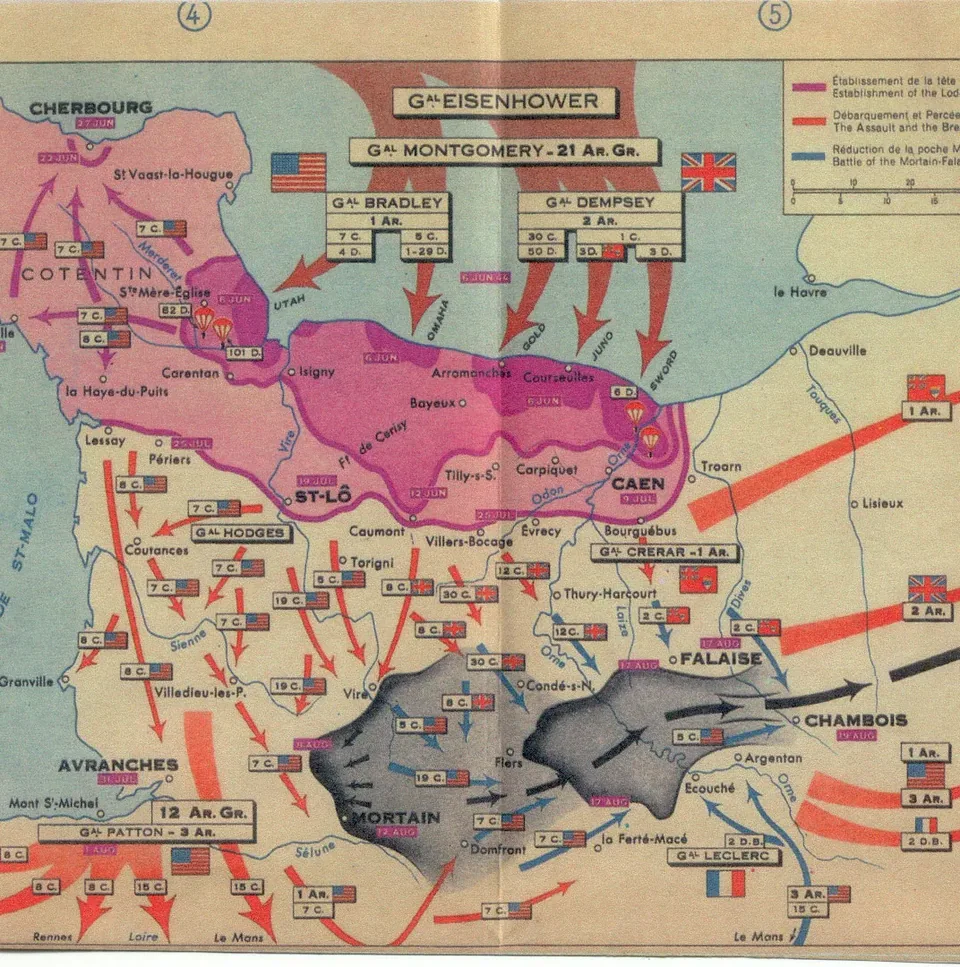
D-Day, i.e. the landing in Normandy.
During World War II, the Allies focused on gaining their first foothold, the famous beach in Normandy. Thanks to this, they were able to expand their activities on a solid foundation and, as a result, defeat the Third Reich.
Land: ~156–160 thousand Allied soldiers landed on the day of the invasion; >10 thousand casualties on the Allied side (including 4,400+ killed).
Expand: ~875,000 were transferred by the end of June. soldiers - the expansion of the bridgehead continued and the liberation of France began in full swing.
Roman Empire
Rome usually began its conquests by landing in a new province with a small garrison, and then gradually expanding its political, economic and cultural influence (expand).
Land: permanent legion camps (castra) and colonies in new provinces; the early coloniae had approximately 300 veteran citizens. Examples: Castra Regina (Regensburg, 179 AD), Deva Victrix (Chester).
Expand: gradual expansion of administration, law and trade.

Christianity
As a religion in a difficult political situation, Christianity began with small communities in a few cities (land), then spread to the entire continent and beyond (expand).
Land: small house churches.
Expand: Edict of Milan (313) - tolerance; Edict of Thessalonia (380) - state religion.

Summary
The "land and expand" strategy is a simple way to acquire customers faster and develop cooperation without the pressure of sales. Instead of fighting for large contracts right away, it is better to start with a small project that opens the door to larger activities.
If you want to see how this approach works in practice, schedule a free consultation and see how we can start cooperation. The first step doesn't cost anything - and it can open up completely new opportunities for your company